
Industrial electrician for plants and machinery.
An industrial electrician installs, feeds and repairs the electrical side of a plant: machinery connections, power distribution, motor control centers, disconnects and 480 volt equipment. Tech Electrical Services is a licensed and insured electrical contractor doing industrial work, based in Calhoun and serving northwest Georgia down to Atlanta, and we take emergency calls 24/7. Call 706-618-0095 to talk through the job.
Serving northwest Georgia to Atlanta
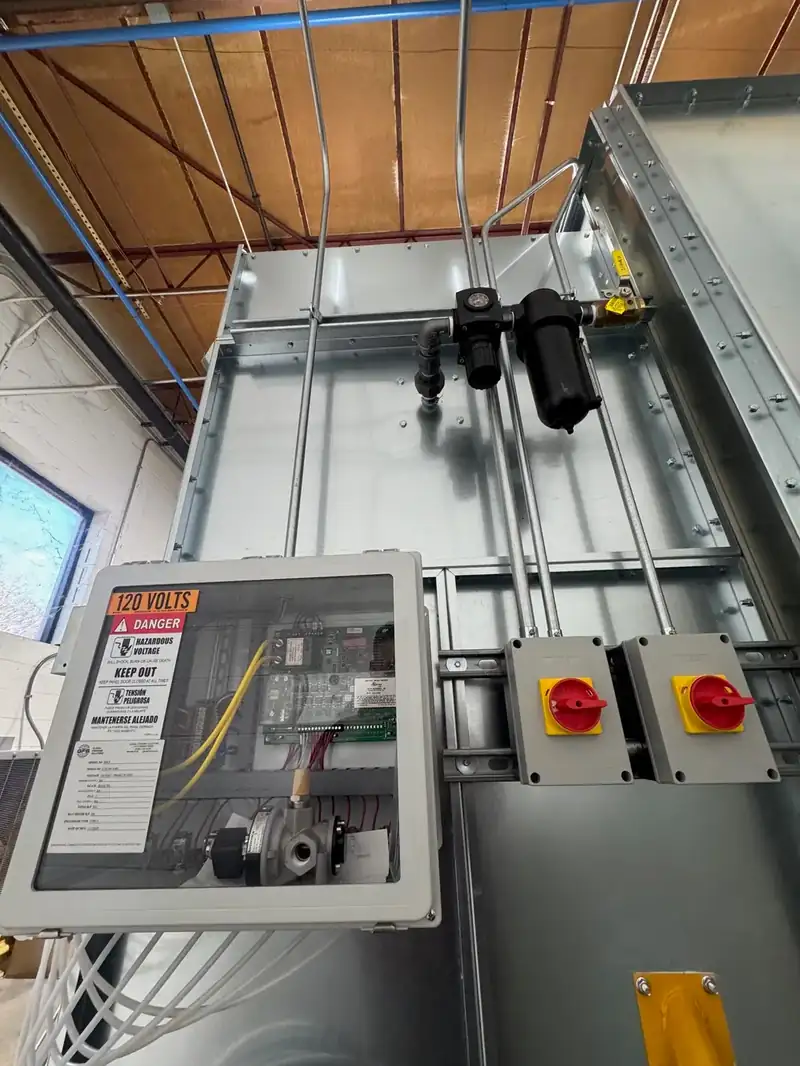
Industrial circuits
What we do on the plant floor
Straight from our industrial service list. Control panels and PLC and automation have their own pages.
- 01Electrical equipment installationSetting and connecting new electrical equipment: supply, disconnecting means, grounding and terminations matched to the nameplate.
- 03Industrial machinery installationBringing power to production machines, whether the machine is new to the plant or moving to a new spot on the floor.
- 05Power distributionFeeders, disconnects and distribution equipment that carry power from the service to each load in the building.
- 07Motor control centersInstalling and working on MCCs, the assemblies that group motor starters, drives and feeders in one place.
- 09Troubleshoot and repairTracing a fault to its cause, whether that is a connection, a protective device, a feeder or the equipment itself, then fixing it.
- 11Emergency calls, 24/7When a line or a machine goes down at night or on a weekend, call 706-618-0095. We take emergency calls around the clock.
On the job
What industrial electrical work involves
It starts with the equipment. The nameplate tells us the voltage, phase and load a machine needs, and the building tells us what is available: where the nearest distribution is, how a feeder can be routed, and where the disconnect belongs so maintenance can lock it out. A lot of plant equipment runs on 480 volt three-phase power, so the work is planned around that from the first walk-through.
Distribution and motor control work is about getting power to many loads in an orderly way. A motor control center groups starters, drives and feeders in one assembly, which keeps motor circuits organized and easier to isolate. When a machine moves or a line is added, we check what the existing distribution and MCC space can carry before anything is connected.
Troubleshooting is methodical. We trace the affected circuit from the source to the load, check connections and protective devices, and find out why something tripped instead of just resetting it. When the equipment also needs controls, our control panel and PLC and automation work picks up from there.
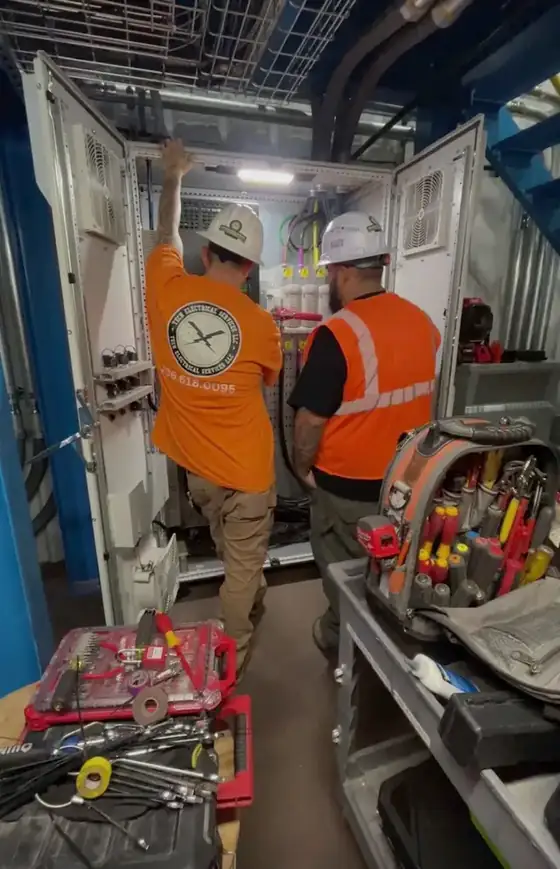
When to call
When a plant needs an industrial electrician
Adding a production machine
A new machine needs a supply matched to its nameplate. An existing drop that looks close enough often is not.
Moving equipment on the floor
A layout change can mean a new feeder route, a new disconnect location and new connections. Bring us in before the machine is set.
Trips that keep coming back
Repeated trips have a cause: a failing motor, a loose connection, an overloaded feeder. Resetting it again does not find it.
More motors than the MCC was built for
Adding motor loads means checking MCC space, feeder capacity and what is already connected.
Equipment that lost power
The fault could be in the supply, a disconnect, a connection or the machine. Tell us what went down and what happened right before.
Old equipment coming out
Removing a machine safely means dealing with its feeder and disconnect properly, not just unplugging it and walking away.
What to expect
From the first call to tested power
Tell us the equipment
Call the main line with the machine, the voltage if you know it, and whether it is an install, a move or a fault.
We walk the floor
We walk the equipment, the distribution it will come from, the feeder route and the disconnect location, and talk through your production constraints.
We install or repair, then test
We make the installation or repair we agreed on, then test the circuits we touched before the equipment goes back in service.
We show your maintenance team
We show your team what changed, where the disconnects are, and anything else we found that needs attention.
Before you call
What to have ready when you call
Five minutes gathering these saves a lot of back and forth, and helps us tell you quickly what the job needs.
- The equipment name, model and a clear photo of the nameplate, if you can safely get one
- Supply voltage and phase, if you know it
- Whether this is new equipment, a move, a removal or a fault
- A rough layout showing the machine and the nearest panel or MCC
- For a fault: what tripped, when it happens, and what changed recently
- Your production schedule and any access limits we need to work around
Questions
Straight answers
Can a new machine use the old machine's connection?
Sometimes, but a matching plug or disconnect does not prove it. The new machine's voltage, phase and load have to be checked against the existing conductors and protection. Send us the nameplate details and we can tell you what it will take.
Do you work on 480 volt equipment and motor control centers?
Yes. Power distribution and motor control centers are on our industrial service list, and 480 volt three-phase equipment is part of that work. What a job involves depends on the equipment ratings and the distribution already in place.
What should I tell you about a machine that keeps tripping?
Which device trips, what the machine is doing when it happens, and whether anything changed recently, like a new motor, a move or a repair. Do not open energized equipment to find out. Tell us what you can see safely and we will take it from there.
Can you handle the controls side too?
Yes. Control panel build and installation and PLC and process automation are both on our industrial list, so the power side and the controls side can be handled by the same contractor.
Other circuits
Related work
Contact
Plant electrical problem? Call us.
Free estimates
Get a free estimate.
Estimates and second opinions are free. Tell us what you need and where, and we will call or email you back. If it is urgent, call 706-618-0095.
Request sent
Thanks. We have your request.
We will call or email you back. If it is urgent, call 706-618-0095.